A concrete plant is a vital piece of equipment in modern construction used to produce concrete in large volumes with consistent quality. It combines raw materials such as cement, water, sand, aggregates, and additives in precise proportions to create concrete for infrastructure, residential, and industrial projects. Understanding different types of batching plant is essential for contractors and investors because plant configuration directly affects production efficiency, cost, and project suitability.
Among the most common classifications are the dry mix concrete batching plant and the wet mix concrete batching plant. Each system has unique operational principles, advantages, and applications depending on project requirements.
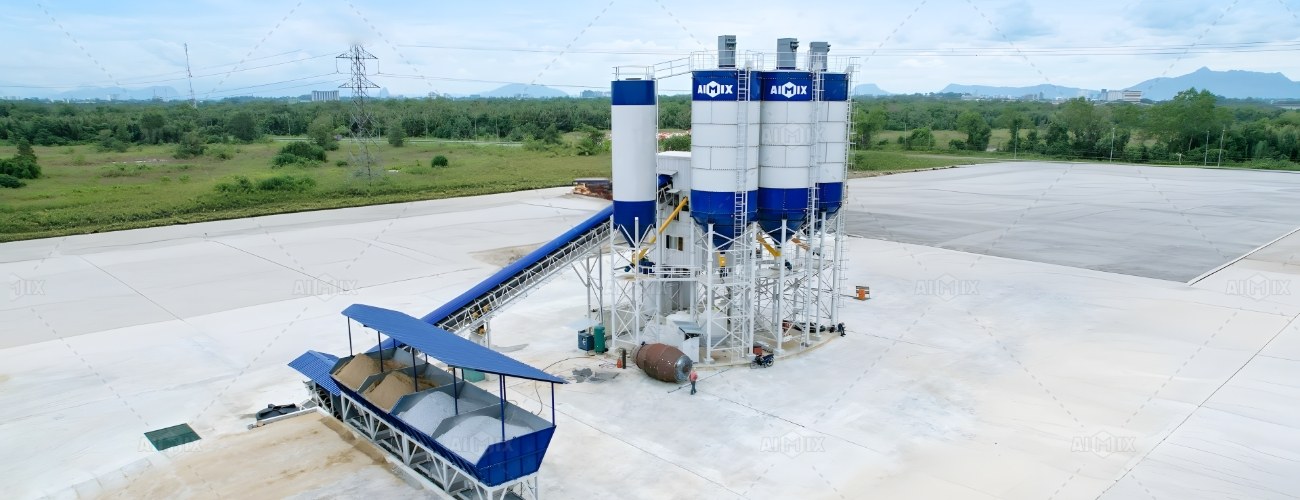
What Is a Concrete Plant?
What is a concrete plant? A concrete plant, also known as a batching plant, is a facility where different ingredients are combined to produce concrete. The process is controlled either manually or through automated systems to ensure accurate mixing ratios. Modern plants are designed to improve production speed, reduce waste, and ensure consistent concrete quality for construction projects of all sizes.
There are different types of batching plant available in the market, including mobile, stationary, modular, dry mix, and wet mix systems. The choice depends on factors such as project scale, site conditions, production capacity, and budget.
Dry Mix Concrete Batching Plant
A dry mix concrete batching plant operates by weighing and batching all raw materials—cement, aggregates, and additives—before loading them into a transit mixer truck. In this system, water is not added at the plant; instead, it is introduced during transportation or at the construction site.
This method allows flexibility in adjusting water content based on site conditions. It is especially useful for projects that require long transportation distances, as concrete is fully mixed only when it reaches the destination.
The dry mix system is often simpler in structure compared to other different types of batching plant, which makes it easier to install and operate. It is commonly used in small to medium-scale construction projects or in locations where on-site mixing is preferred.
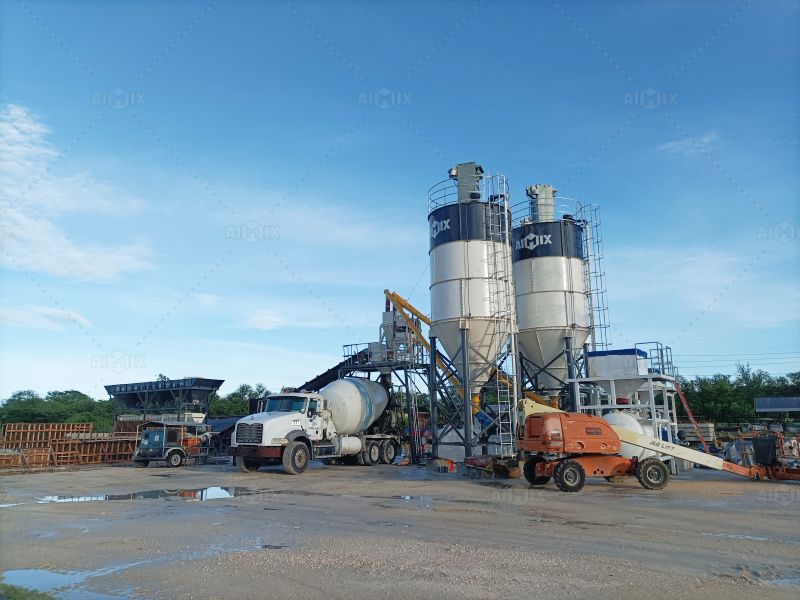
Advantages of Dry Mix Concrete Batching Plant
One of the main advantages of a dry mix system is its cost efficiency. Since mixing occurs in transit mixers rather than at the plant, the equipment design is simpler and requires less maintenance. This reduces initial investment costs and operational complexity.
Another advantage is flexibility. Contractors can adjust the water-to-cement ratio at the job site based on real-time conditions such as temperature and humidity. This helps improve workability and adaptability in varying construction environments.
Wet Mix Concrete Batching Plant
A wet mix concrete batching plant produces fully mixed concrete at the plant before it is loaded into transport trucks. In this system, all ingredients including water are combined in a central mixer, ensuring that the concrete is completely homogenized before leaving the facility.
Because mixing occurs under controlled conditions, wet mix systems produce higher-quality and more consistent concrete. This makes them suitable for large infrastructure projects where strength, durability, and uniformity are critical.
Among the different types of batching plant, wet mix systems are generally considered more advanced due to their automation level and precision control over mixing parameters.
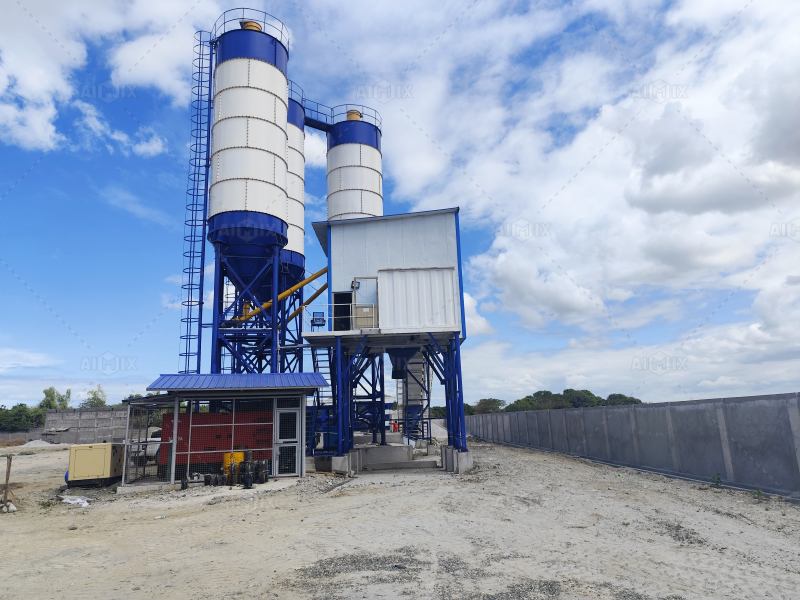
Advantages of Wet Mix Concrete Batching Plant
The main advantage of a wet mix system is superior concrete quality. Since mixing is completed at the plant, the final product is more uniform and stable, reducing the risk of inconsistencies in construction.
Wet mix plants also support high production capacity and are commonly used in large-scale infrastructure projects such as highways, bridges, airports, and industrial complexes. Their automated systems improve efficiency and reduce human error in batching operations.
Key Differences Between Dry Mix and Wet Mix Systems
The primary difference between a dry mix concrete batching plant and a wet mix concrete batching plant lies in the mixing process. In dry mix systems, materials are batched but not mixed with water until transportation, while wet mix systems complete the entire mixing process at the plant.
Dry mix plants offer flexibility and lower cost, but wet mix plants provide higher consistency and better quality control. The choice between them depends on project scale, transportation distance, and quality requirements.
In terms of equipment complexity, wet mix plants are more advanced and typically require higher investment. Dry mix plants, on the other hand, are simpler and easier to operate, making them suitable for smaller projects or temporary setups.
Conclusion
Understanding what a concrete plant is and the role of different types of batching plant is essential for selecting the right system for construction projects. Both the dry mix concrete batching plant and the wet mix concrete batching plant offer distinct advantages depending on operational needs.
Dry mix systems provide cost efficiency and flexibility, while wet mix systems deliver higher quality and consistency for large-scale projects. By evaluating project requirements carefully, contractors can choose the most suitable batching solution to optimize productivity, reduce costs, and ensure long-term construction success.