In many rural housing developments across Indonesia, especially in Sulawesi, contractors often face a similar reality. The project sites are spread out, the access roads are not always ideal, and the concrete demand changes from one housing cluster to another. Because of this, choosing the right batching solution becomes a key decision that directly affects cost, speed, and construction stability.
For a 200-house rural housing project, many project owners start to compare different plant options, including small concrete batching plant solutions that offer flexibility for limited budgets and smaller output needs. However, when the project scale increases, a more mobile and efficient system may become necessary.
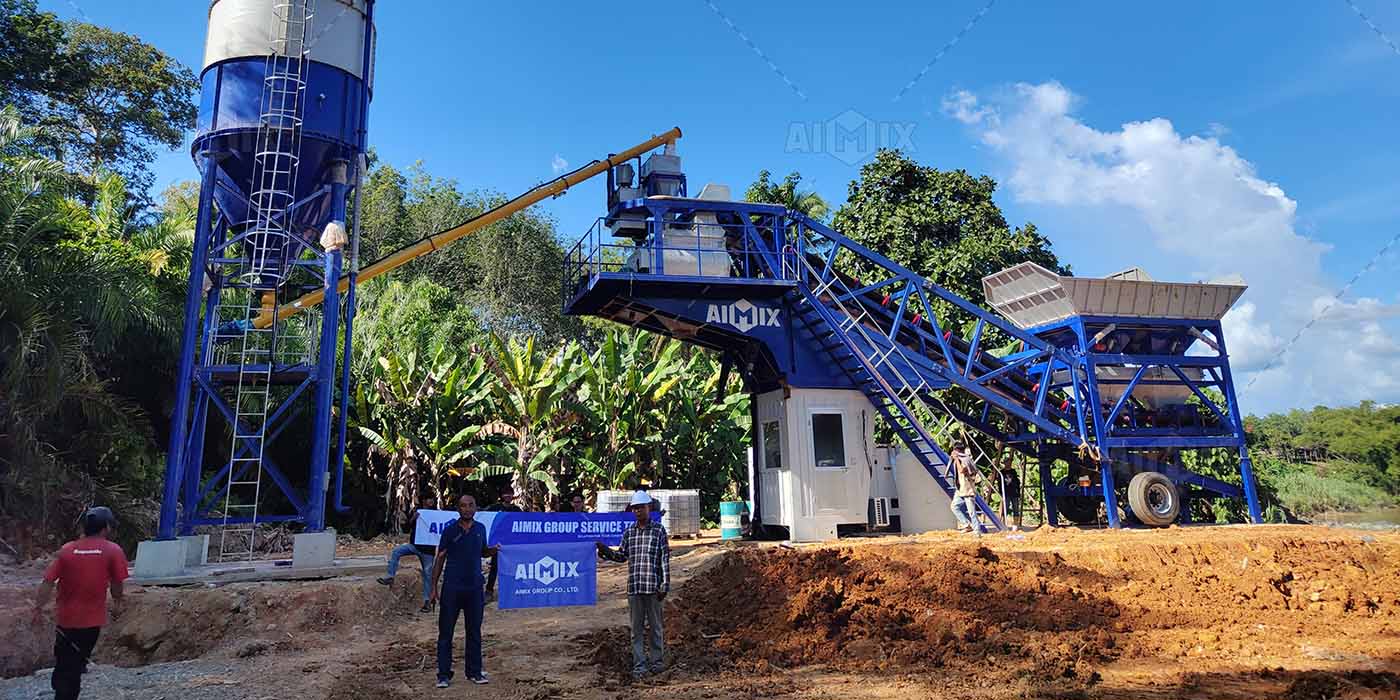
Understanding the Real Concrete Demand in a 200-House Project
Before selecting equipment, it is important to understand the real construction demand. In a typical rural housing project in Sulawesi, each house may require 25–40 m³ of concrete depending on structural design and foundation depth.
So, when we calculate the full project scale, total demand can reach 5,000–8,000 m³ or even more. At this stage, consistency becomes more important than anything else. If supply slows down, the entire housing delivery schedule will be affected.
To handle this level of workload, many contractors begin comparing flexible systems such as mobile concrete batching plants, which are designed to move with the project and reduce long-distance concrete transport delays.
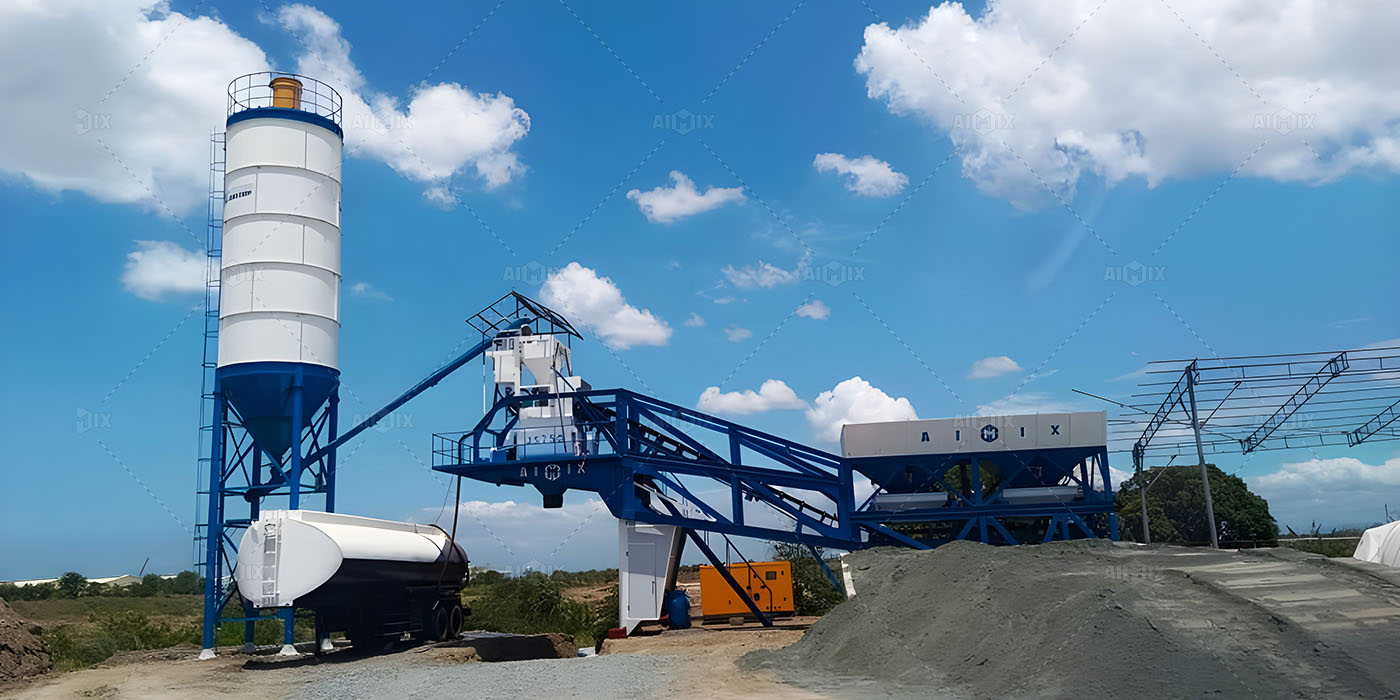
Can a 40 m³/h Mobile Plant Meet the Daily Construction Rhythm?
A 40 m³/h mobile plant is considered a medium-capacity solution. In real working conditions, it can produce around 320–400 m³ per day if the operation runs efficiently.
This level of output can support steady housing construction, especially when multiple teams work in parallel. However, success depends on how well the construction schedule is organized.
1. Production and Workflow Balance
If we break it down, a 40 m³/h plant can support around 10–15 houses per day under normal conditions. This means that a 200-house project can be completed in a structured and predictable timeline.
However, efficiency increases significantly when concrete pouring is well coordinated. Therefore, planning becomes just as important as equipment selection.
2. Why Mobility Matters in Sulawesi Projects
In rural areas of Sulawesi, construction sites are often separated by distance and terrain conditions. Because of this, mobility is not just a feature—it becomes a necessity.
Instead of transporting concrete over long distances, contractors can reposition the plant closer to active zones. In many cases, a compact batching plant is also considered when space is limited but flexibility is still required.
As we move further, the next question is how this setup performs in real cost and logistics scenarios.
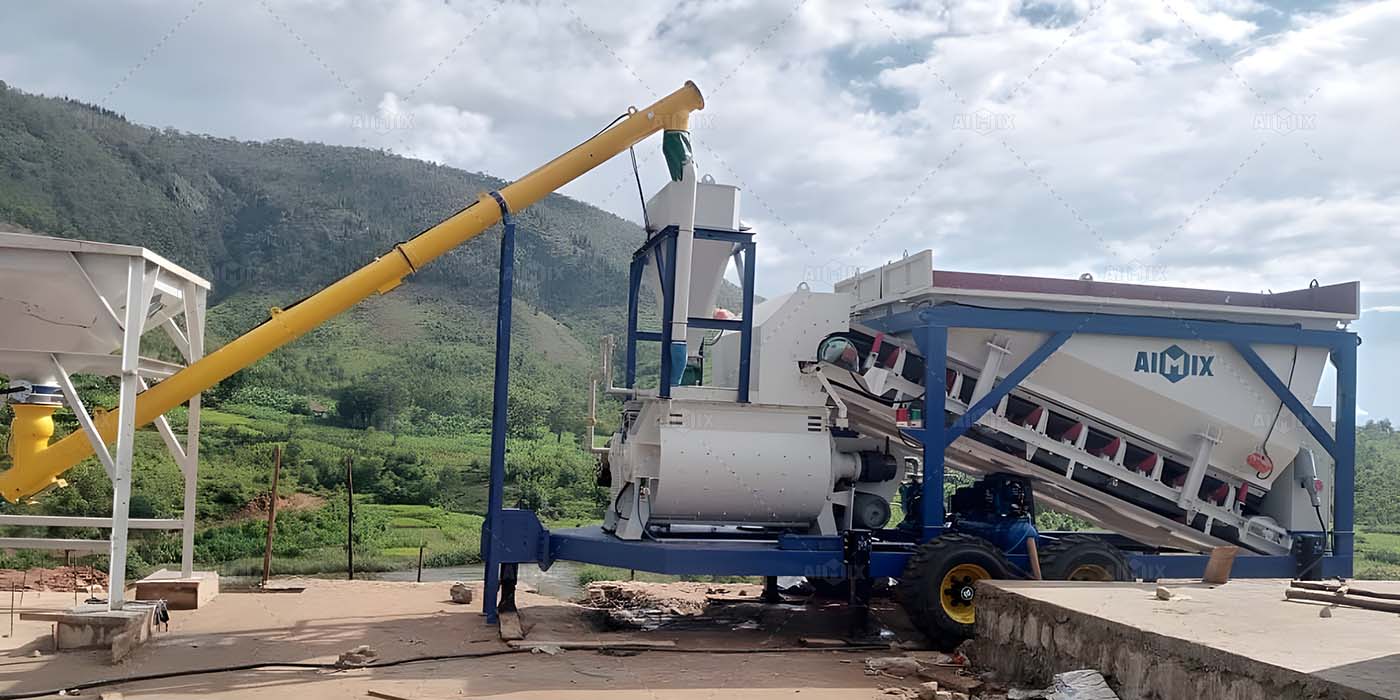
Cost Efficiency and On-Site Advantages
One of the biggest advantages of a mobile system is cost control. When concrete is mixed on-site or near-site, transportation cost decreases significantly. At the same time, material loss during transport is also reduced.
In addition, contractors gain better control over mix design, which is critical for housing durability in humid regions like Sulawesi. This leads to more stable long-term building performance.
For contractors searching locally, many also explore options like batching plant terdekat to quickly compare nearby availability and reduce delivery time.
Practical Limitations You Should Consider
Although a 40 m³/h mobile plant offers strong flexibility, it still has limitations. For example, if a project requires extremely high daily output above 500 m³ consistently, a single unit may not be enough.
In addition, stable power supply and well-managed material storage are essential. Without these conditions, even a good plant cannot achieve its full efficiency.
Therefore, contractors should always match equipment selection with real site conditions and project management capability.
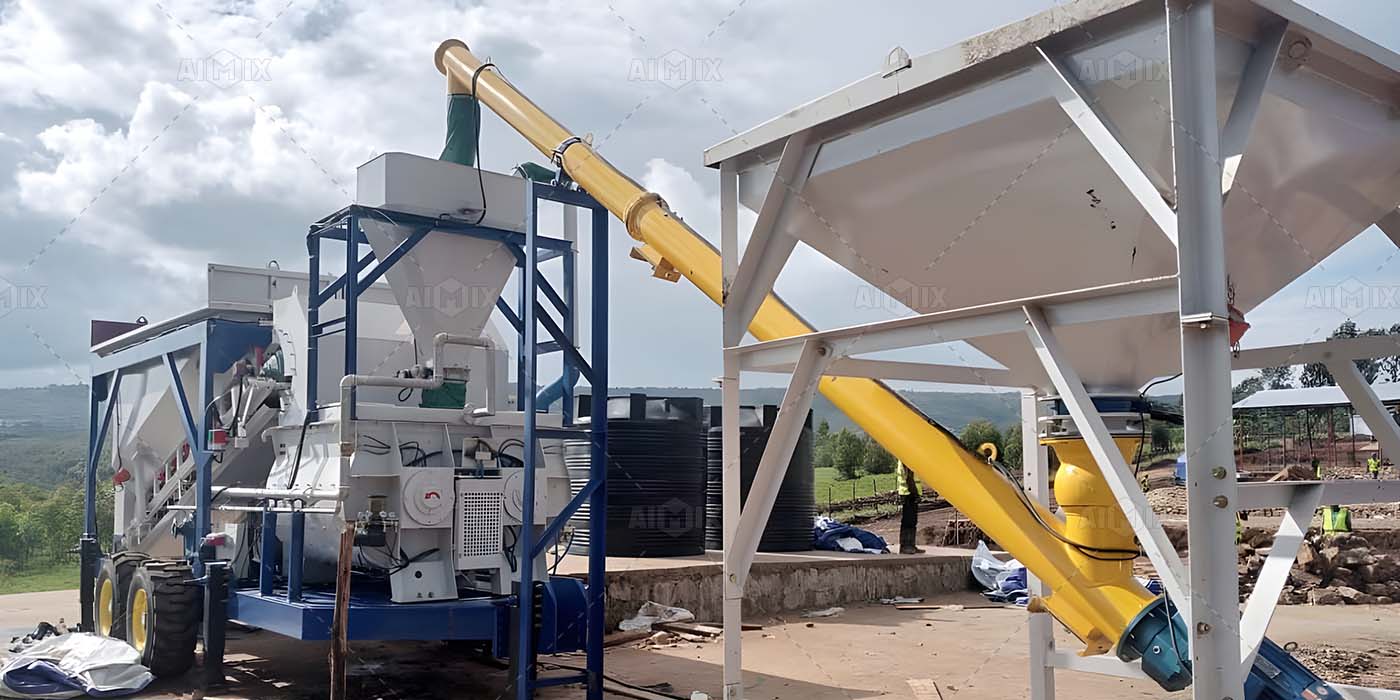
Final Evaluation for a 200-House Rural Housing Project
From a practical construction perspective, a 40 m³/h mobile concrete batching plant is generally suitable for a 200-house rural housing project in Sulawesi.
It provides a balanced combination of production capacity, mobility, and cost efficiency. More importantly, it helps contractors maintain consistent supply across scattered housing clusters.
When properly planned, this type of plant can support smooth workflow, reduce logistics pressure, and improve overall project control.
Conclusion and Call to Action
In conclusion, choosing the right batching plant is not only about capacity but also about adaptability to local conditions. A 40 m³/h mobile concrete batching plant offers a practical solution for rural housing projects where flexibility and stability matter most.
If you are planning a 200-house project in Sulawesi or similar regions, selecting the right configuration early can significantly improve your construction efficiency and cost control.
Contact us today to get a tailored solution based on your project scale, site conditions, and production needs. A well-matched batching system can make your entire construction process faster, smoother, and more profitable.