Selecting the right gantry crane for any industrial operation is a critical decision that directly impacts safety, efficiency, and overall productivity. Among the many factors influencing this choice, material weight stands out as one of the most significant. Understanding how the weight of the materials to be lifted and moved affects crane selection ensures optimal performance and longevity of the equipment. This article explores the relationship between material weight and gantry crane selection, covering key considerations, practical examples, and best practices for operators and facility managers.

Understanding Gantry Crane Capacity
Gantry cranes are designed to lift, move, and position heavy loads in a variety of industrial settings, including steel mills, shipyards, construction sites, and warehouses. Each crane comes with a rated load capacity, which represents the maximum weight it can safely lift under specified operating conditions. Exceeding this limit can lead to equipment failure, safety hazards, and costly downtime.
The weight of the material is therefore the first criterion when determining the suitable gantry crane. For instance, lifting a 10-ton steel coil requires a different crane than handling a 100-ton precast concrete block. Knowing the exact weight and distribution of the load allows engineers to select a crane that not only meets the capacity requirement but also ensures safe and efficient operation.
Types of Gantry Cranes and Material Weight Considerations
There are several types of gantry cranes, and each responds differently to varying material weights:
1. Light-Duty Gantry Cranes
These cranes typically handle loads up to 10–15 tons. They are often used in workshops, small manufacturing facilities, and assembly lines where materials are relatively light, such as aluminum sheets, small machinery parts, or light construction components. Selecting a light duty gantry crane for heavier materials is unsafe, while using a crane with too high a capacity for small loads may be economically inefficient.
2. Medium-Duty Gantry Cranes
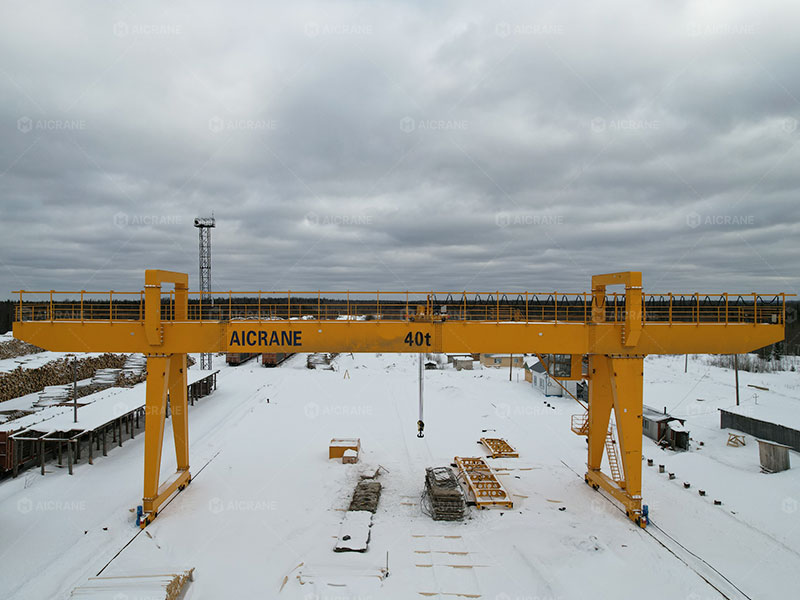
Medium-duty cranes usually range from 15 to 50 tons. They are commonly deployed in steel workshops, precast concrete plants, and general industrial facilities. When lifting steel beams, concrete slabs, or large machinery components, the material weight directly informs the selection of girder strength, hoist power, and overall structural design of the crane.
3. Heavy-Duty Gantry Cranes
Heavy-duty gantry cranes, with capacities above 50 tons, are used in demanding applications like shipbuilding, port container handling, and heavy equipment manufacturing. For instance, moving ship sections weighing hundreds of tons requires cranes specifically engineered to handle extreme loads. Material weight in such cases dictates not only the crane’s load capacity but also its span, lifting height, stability systems, and foundation requirements.
Factors Influencing Gantry Crane Selection Based on Material Weight
1. Load Weight
The absolute weight of the material is the primary determinant. A crane must have a rated capacity higher than the maximum expected load. Safety factors are also applied, usually ranging from 1.25 to 1.5 times the maximum load, depending on standards and local regulations.
2. Load Distribution
Materials rarely have perfectly uniform weight distribution. Irregularly shaped or long loads, such as steel pipes or large wooden beams, may concentrate weight unevenly across the lifting points. This requires careful consideration of the crane’s hoist configuration, spreader beams, and lifting attachments to prevent overloading specific sections of the crane.
3. Lifting Height
The height at which a load is lifted affects the required hoist capacity. Heavier loads lifted to greater heights exert additional stresses on the crane structure and hoist mechanisms. For instance, lifting a 50-ton steel block 10 meters off the ground is more demanding than moving the same block a few meters.
4. Span and Travel Distance
The crane span (distance between rails or legs) and travel distance influence the structural design. Heavier materials may require wider spans for better stability or additional support in the crane girder, trolley, or rail system. Longer travel distances also necessitate stronger motors and reinforced structural components to maintain safe operation.
5. Dynamic Factors
Material weight affects not only static loading but also dynamic forces generated during movement, acceleration, and deceleration. Sudden starts, stops, or swinging of heavy loads can significantly increase stress on the crane. Selecting a crane with appropriate duty classification and control systems ensures these dynamic forces are managed safely.
Practical Examples of Material Weight Consideration
Steel Manufacturing
In a steel workshop, gantry cranes lift steel coils, sheets, and beams weighing from 5 to 100 tons. Choosing a crane involves analyzing both the maximum weight and the average load frequency. Overloading a crane with an underestimated steel coil weight can lead to structural failure, while over-specifying a crane may unnecessarily increase costs.
Shipbuilding
Shipyards handle sections weighing hundreds of tons. Here, heavy duty gantry cranes with reinforced girders, high-capacity hoists, and wide spans are required. Material weight analysis informs the selection of lifting points, hoist synchronization, and safety systems.
Construction
In precast concrete production, cranes lift slabs and beams ranging from a few tons to 50 tons. Accurate knowledge of weight ensures the gantry crane can handle the heaviest pieces without risking structural strain, hoist damage, or operator injury.
Best Practices for Selecting a Gantry Crane Based on Material Weight
-
Conduct a Load Survey: Assess all materials that will be lifted, including their maximum and average weights, dimensions, and weight distribution.
-
Factor in Safety Margins: Apply appropriate safety factors to ensure the crane operates below its rated capacity.
-
Consider Duty Cycle: Frequent heavy lifts require cranes designed for high-duty operations, not just maximum capacity.
-
Select Appropriate Hoist Type: Electric, hydraulic, or mechanical hoists may be chosen based on load weight and lifting speed requirements.
-
Plan for Future Needs: Consider potential increases in material weight or production scale when selecting capacity.
-
Regular Maintenance and Inspection: Heavier materials put more stress on crane components, so regular inspection and preventive maintenance are essential for long-term safety.
Conclusion
Material weight is one of the most critical factors in gantry crane selection. Ignoring it or underestimating loads can compromise safety, reduce efficiency, and lead to costly equipment failures. By carefully assessing material weight, distribution, lifting height, and operational frequency, facility managers can select gantry cranes that provide reliable, safe, and efficient lifting solutions. From light-duty workshop gantry cranes to massive shipyard gantries, understanding how material weight influences crane selection ensures the right balance of performance, safety, and cost-efficiency in any industrial operation.