Investing in industrial road construction equipment is one of the most capital-intensive decisions a contracting firm or project management team can undertake. Securing a high-performing asphalt plant requires far more than comparing upfront price quotes or skimming through glossy sales brochures. The technical engineering, environmental compliance, operational adaptability, and long-term supply chain reliability of the equipment directly dictate your profit margins over decades of operation. To ensure your investment yields maximum return, you must navigate supplier discussions with a structured vetting framework. Asking targeted, technically rigorous questions early in the procurement process helps reveal hidden lifecycle costs, potential operational bottlenecks, and the true capabilities of an asphalt plant(planta de asfalto) under real-world job site conditions.
Technical and Operational Specifications
Production Capacity and Aggregate Processing Capabilities
While manufacturers list nominal hourly output ratings, real-world productivity depends heavily on aggregate moisture levels, burner efficiency, and job site elevation. When evaluating any asphalt plant, ask the supplier how their rated capacity scales under challenging environmental conditions. For instance, if your job site processes aggregates with high natural moisture content, drying times increase significantly, which can drastically lower hourly throughput unless the dryer burner is appropriately oversized.
- What is the effective hourly output when processing aggregates with 5% or higher moisture content?
- How does the burner system adjust fuel-to-air ratios across varying altitude levels and ambient temperatures?
- What screen deck size options and bin configurations are included to manage diverse aggregate gradations?
Equipment Mobility and Footprint Efficiency
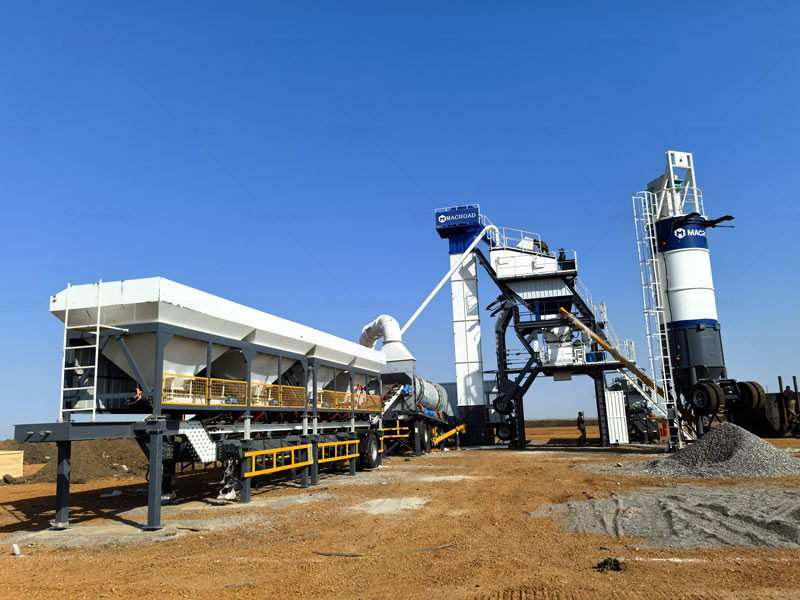
For contractors managing spread-out municipal projects or remote infrastructure contracts, equipment mobility is a primary operational constraint. If your project pipeline involves frequent relocation between job sites, a compact small asphalt plant(planta de asfalto pequeña) may offer superior mobilization speeds compared to massive stationary towers. Ask the supplier about transport dimensions, foundation setup requirements, and whether the plant utilizes modular containerized frames that eliminate the need for heavy concrete foundations.
Financial Structure, Pricing Breakdown, and Total Cost of Ownership
A major pitfall in heavy equipment acquisition is focusing solely on the baseline equipment price while overlooking installation, freight, import duties, and auxiliary component costs. A transparent supplier should provide a comprehensive breakdown that accounts for every stage of deployment.
| Cost Category | Key Questions to Ask Supplier | Impact on Budget |
|---|---|---|
| Baseline Machinery | What core components are included in the base quote versus optional add-ons? | Initial Capital Expenditure |
| Shipping & Logistics | Are logistics managed CIF or FOB, and what are container dimensions? | Freight & Customs Clearance |
| Auxiliary Systems | Does the price cover hot oil heaters, bitumen storage tanks, and baghouses? | Operational Readiness |
| Operating Costs | What is the average fuel consumption per ton of finished mix? | Long-term Variable Expense |
Understanding Total Investment and Hidden Fees
When comparing quotes across different vendors, evaluating the true asphalt plant price(planta de asfalto precio) requires looking beyond the initial invoice. Ask vendors to clarify energy consumption benchmarks, wear-part replacement schedules, and electrical power demands. A lower purchase price can quickly be negated by inefficient fuel burners or high maintenance requirements over the machine’s operational lifecycle.
Control Systems, Automation, and Operational Safety
Modern asphalt mixing facilities rely heavily on automated PLC control software to maintain precise aggregate-to-bitumen ratios. Asking suppliers about the control interface can reveal how easily your local operators can manage daily recipe changes, generate production reports, and diagnose electrical faults.
Software Flexibility and Manual Override Controls
Inquire whether the plant software allows custom recipe storage and real-time aggregate moisture compensation. Additionally, verify if full manual override capabilities exist in case sensor components experience transient faults, ensuring that daily paving targets are not compromised by temporary electronic glitches.
Regional Compliance and Custom Environmental Standards
Environmental standards and emissions regulations vary significantly across regional construction markets. Equipment that complies with basic industrial standards in one country may fail stringent particulate matter or noise pollution requirements in another. Buyers must confirm that dust collection systems, filtration media, and burner emissions meet local environmental agency mandates.
For example, contractors procuring machinery for growing South American markets, such as projects requiring compliant asphalt plants in Peru, face strict regulatory oversight regarding particulate emissions and mountain altitude performance. Sourcing a small asphalt plant or continuous drum system equipped with high-efficiency pulse-jet baghouse filters ensures that dust emission levels remain well below local statutory limits, preventing costly project shutdowns or municipal fines.
After-Sales Support, Spare Parts Availability, and Warranty
Technical Support and Field Commissioning
Equipment downtime during peak construction season can result in severe financial penalties and lost client contracts. Inquire directly about the supplier’s field commissioning protocol. Will the manufacturer dispatch qualified installation engineers to your job site? Do they offer comprehensive training for your local operating crew on control system troubleshooting and safety procedures?
Spare Parts Supply Chain and Logistics
Ask suppliers about their regional spare parts inventory and logistics dispatch speed. Critical wear items—such as drying drum flighting, mixer paddle tips, screen meshes, and baghouse filter sleeves—must be readily accessible. Establishing a clear understanding of parts availability before purchasing an asphalt plant for sale guarantees that routine maintenance schedules do not turn into extended machine outages.
Selecting the right manufacturing partner requires looking beyond superficial product specifications and asking hard, operational questions. By conducting a thorough technical audit of production capacity, evaluating true operational expenses, confirming regional emissions compliance for markets like asphalt plants in Peru(plantas de asfalto en Perú), and securing robust after-sales commitments, contractors can acquire a high-value asset tailored to their long-term growth and project demands.