A mini mobile concrete plant can change the economics of a construction project before the first batch of concrete is even produced. For contractors working on small to medium-sized projects, the investment decision is rarely determined by production capacity alone. Site preparation, transportation, installation, commissioning, labor, and the time required to begin concrete production can all influence the actual return on equipment. A mini concrete plant that starts operating earlier may allow concrete-intensive work to begin sooner, reduce dependence on external suppliers, and keep crews productive. However, faster startup does not automatically guarantee faster payback. The real advantage appears when the time saved during deployment translates into measurable project value, higher equipment utilization, or earlier revenue generation.
How Faster Startup Changes the Economics of a Mini Mobile Concrete Plant
Installation Time Is Part of the Investment Equation
The purchase price of a concrete plant is visible. The cost of waiting is less obvious.
A conventional stationary plant may require substantial groundwork before production can begin. Foundations, aggregate storage areas, electrical connections, access roads, structural assembly, and commissioning can extend the deployment period. These requirements can be reasonable when a plant is expected to remain at one location for years, but they become more consequential when the project schedule is compressed.
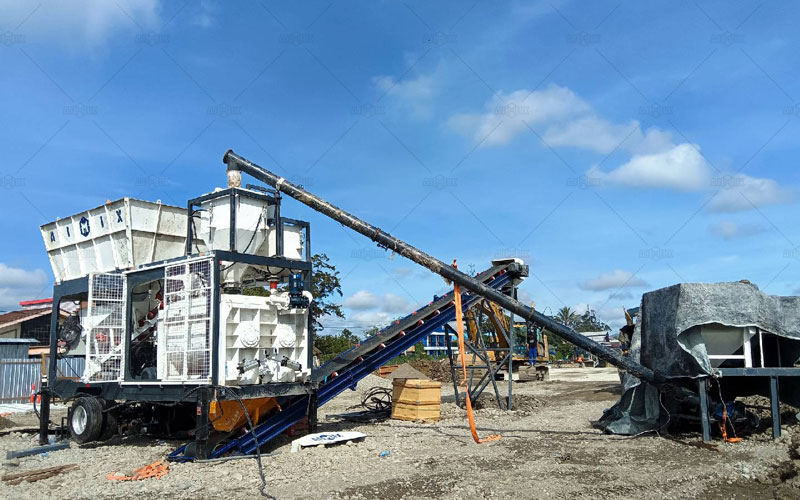
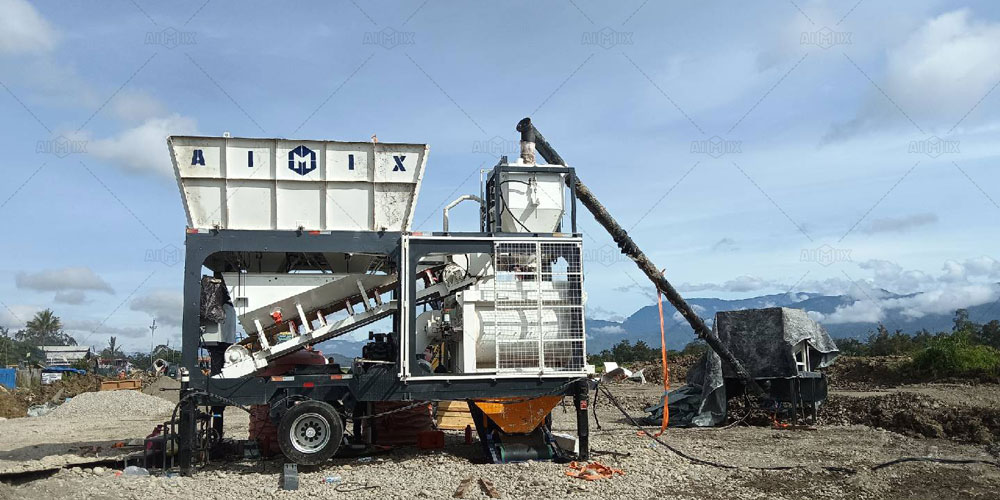
A mini mobile concrete plant approaches deployment from a different angle. Its compact and integrated configuration can simplify transportation, positioning, and installation, depending on the specific design and site conditions.
The commercial implication is straightforward: the equipment can potentially spend less time in the “setup” phase and more time in the “productive operation” phase.
Earlier Production Can Protect the Construction Schedule
Concrete is rarely an isolated construction activity. Foundations, columns, slabs, pavements, drainage structures, retaining walls, and other works often depend on a reliable supply of fresh concrete.
If the concrete plant is not ready, downstream activities may also be delayed.
A faster project startup can therefore have a cascading effect. Earlier batching may allow concrete placement to begin sooner, helping crews maintain the planned construction sequence.
This becomes particularly valuable when a project has strict completion deadlines, seasonal constraints, or contractual milestones.
Time Saved Has Value Only When It Is Used
A faster setup creates an opportunity, not an automatic financial return.
If a contractor saves several days during installation but the project is not ready for concrete production, the commercial benefit may be limited. Conversely, if concrete work is already scheduled and crews are waiting for supply, those same days can represent meaningful productive time.
The key question is therefore not simply:
How quickly can the plant be installed?
It is:
What productive work can begin because the plant is installed sooner?
When Early Concrete Production Can Accelerate Equipment Payback
Reducing Dependence on External Concrete Supply
Contractors relying on commercial ready-mix suppliers must coordinate delivery schedules, transportation distances, minimum order quantities, and supplier availability.
These factors can become troublesome when the project is located far from commercial batching facilities or when concrete demand fluctuates throughout the construction process.
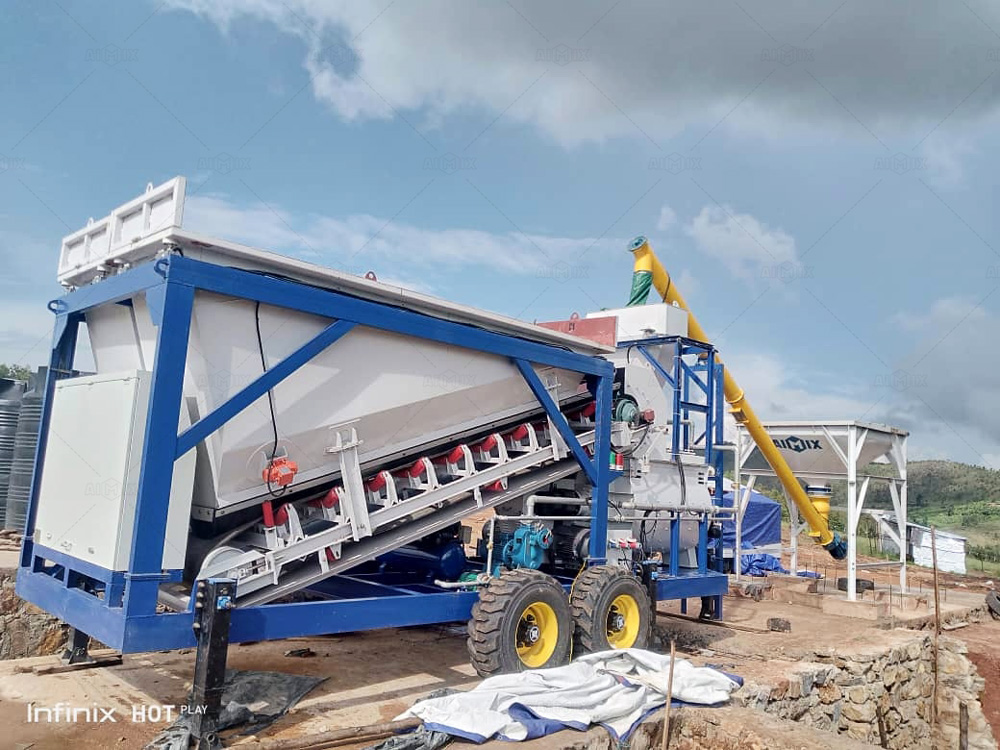
A mini mobile concrete batching plant for sale can provide localized production. Instead of waiting for every delivery, the contractor can produce concrete closer to the project and according to actual demand.
This does not eliminate all logistical requirements. Cement, aggregates, water, admixtures, and fuel or electricity still need to be available. However, it changes the structure of the supply chain.
More Control Over Small and Irregular Concrete Demand
Large construction projects often consume concrete in predictable volumes. Smaller projects can be much less consistent.
One day may require a substantial concrete pour. The next may involve only a small quantity.
External suppliers may not always find such fragmented demand convenient. A mobile plant can provide greater operational autonomy, allowing production to be adjusted around the construction sequence.
This flexibility can prevent both under-supply and excessive ordering.
Higher Equipment Utilization Can Shorten Payback
Equipment does not generate economic value merely because it is owned. It creates value when it is used productively.
A mini mobile concrete plant can potentially serve several types of projects, including:
* Residential and commercial construction
* Road and pavement projects
* Foundations and structural works
* Drainage and culvert construction
* Small infrastructure projects
* Precast production
* Remote construction sites
The broader the practical application range, the greater the opportunity to keep the equipment active.
One Project Can Build the Case for the Next
For contractors, the value of a mobile plant may extend beyond a single contract.
After completing one project, the same equipment can potentially be transported to another site. This makes the investment less dependent on the duration of one particular project.
A machine that can move between jobs may generate revenue across a wider operating window, provided transportation and setup remain commercially practical.
Labor and Equipment Coordination Can Also Affect Payback
A mini mobile concrete plant may reduce the number of separate machines and logistical interfaces required for concrete production.
A conventional arrangement might involve a stationary batching plant, loader, conveyors, mixer trucks, and additional supporting equipment. Each component introduces another operator, maintenance requirement, scheduling dependency, or potential bottleneck.
A compact mobile configuration can consolidate some of these requirements.
The financial impact should be assessed carefully because actual labor savings depend on plant configuration and local operating conditions. Nevertheless, fewer equipment handoffs can contribute to a smoother production cycle.
How to Evaluate Whether a Mini Mobile Plant Is a Financially Sound Investment
Calculate the Total Cost of Deployment
Purchase price should be only one part of the financial assessment.
Contractors should consider:
* Equipment purchase price
* Transportation to the project
* Site preparation
* Installation and commissioning
* Labor requirements
* Fuel or electricity consumption
* Maintenance and spare parts
* Aggregate and cement handling
* Relocation costs
* Financing or depreciation
* Expected residual value
This provides a more realistic picture of the investment than comparing equipment prices alone.
Estimate the Revenue Generated During Productive Operation
The next step is to estimate how much concrete the plant can realistically produce and sell or consume during actual working hours.
Theoretical production capacity is useful, but actual utilization is more important.
A simplified calculation can be expressed as:
Annual productive output = Practical hourly output × Productive operating hours × Utilization rate
For example, a plant with a high nominal capacity may not outperform a small concrete batch plant if the larger system experiences frequent waiting, difficult setup, or low utilization.
Measure the Value of Faster Startup
The economic value of rapid deployment can be estimated by comparing the revenue or cost savings generated during the time saved.
For instance, if a mobile plant allows a contractor to begin concrete production ten days earlier, the financial benefit depends on what those ten days enable.
Potential benefits could include:
* Earlier foundation completion
* Reduced external concrete purchases
* Lower equipment rental costs
* Earlier completion of contractual milestones
* Increased crew utilization
* Earlier mobilization to the next project
The faster startup becomes financially meaningful when these benefits are measurable.
Do Not Confuse Faster Setup With Automatic ROI
A plant can be installed rapidly and still produce a poor return if it remains underutilized.
This distinction is crucial.
Fast assembly is an enabling characteristic. It improves the investment case when combined with sufficient concrete demand, efficient operations, appropriate site conditions, and repeat project opportunities.
Compare Mobile Flexibility With Long-Term Stationary Use
A stationary plant can remain the better choice for a large, long-duration project with stable concrete demand. Its permanent infrastructure may be justified because the installation cost is distributed across many years of operation.
A mini mobile concrete plant becomes more compelling when flexibility has genuine economic value.
This includes projects where the plant needs to move between locations, where site preparation must be minimized, or where concrete demand is significant but not sufficient to justify a permanent production facility.
The correct choice therefore depends on the contractor’s operating model rather than a universal preference for mobility.
Look at Payback as a Function of Utilization and Time
The fundamental relationship can be simplified as:
Payback period = Total investment ÷ Net economic contribution generated over time
Faster startup can improve the denominator by creating additional productive operating time earlier in the project.
But utilization remains the decisive variable.
If a mini mobile concrete plant begins production quickly and continues serving project after project, the investment can potentially recover its cost sooner. If it is installed quickly but remains idle between occasional jobs, setup speed contributes much less to the final return.
When Faster Startup Becomes a Genuine Business Advantage
A mini mobile concrete plant makes the strongest economic case when three conditions occur together: concrete is needed quickly, the project can support consistent plant utilization, and the equipment’s mobility or simplified deployment creates savings that conventional production cannot easily provide.
In this situation, faster startup is more than a technical feature. It becomes part of the contractor’s commercial strategy.
Earlier production can help maintain construction momentum. Localized batching can reduce dependence on external supply. Mobility can allow the same asset to follow future projects. And shorter installation requirements can reduce the amount of capital tied up in site infrastructure.
The most important lesson is that payback should not be judged by purchase price of concrete batching plant alone. A mini mobile concrete plant earns its investment through productive hours, concrete output, supply independence, and repeated utilization.
Faster project startup can accelerate payback—but only when those saved days become productive construction days. That is where deployment speed changes from a convenient engineering characteristic into a genuine business advantage.